Crochet Christmas Tree Pattern with Layered Branch
Snow hasn’t touched the window yet, but a little cone of stacked green ruffles already smells like the holidays are close. The Crochet Christmas Tree Pattern with Layered Branch builds tier by textured tier into a piece that looks pulled straight off a mantel display.
Grab a skein of worsted-weight green and a spare afternoon, because the layered branch technique turns simple single crochet into something with real dimension. The tiered shape stands on its own, needs no sewing machine or glue gun to finish, and works equally well as a shelf centerpiece or a handmade gift under someone else’s tree.
Crochet Christmas Tree Overview
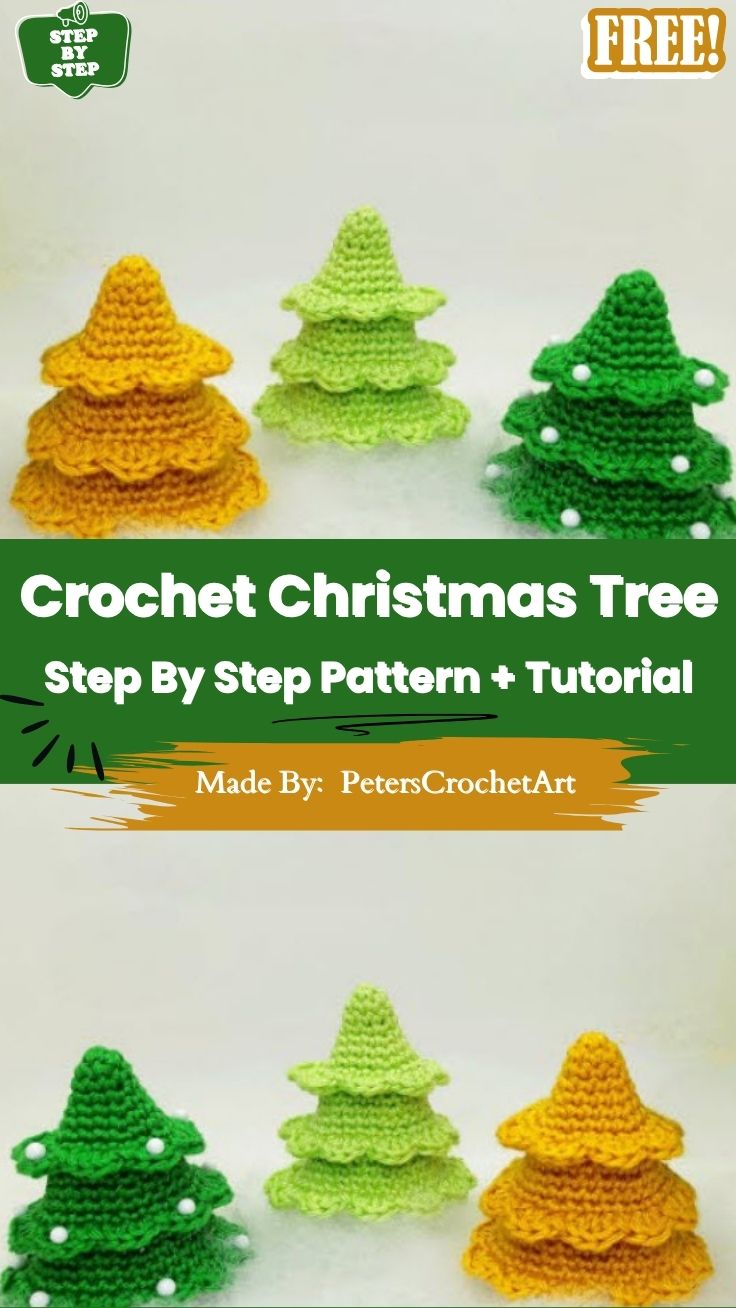
The design is built from a stuffed cone base with three (or more) ruffled tiers stacked on top of each other. Each tier is slightly smaller than the one below it. A short trunk and a simple topper star, pom-pom, or bead finish the silhouette. Every tier is worked separately, then joined by hand once all pieces are complete, so the project comes together section by section.
Style and Look
Rather than a smooth, solid cone, the branch layers are worked so loops or ruffled edges stick outward from the tree’s body. The effect mimics real pine needles. It comes from working into only the front or back loop of each stitch, leaving the opposite loop free to flare outward. That small technical choice makes a big visual difference once several tiers are stacked.
Time Box
Budget roughly two to three hours total. Plan on about 30–40 minutes per tier, plus extra time for the base, trunk, and final assembly. Crocheters comfortable working in the round will move fastest. Total time will run longer for anyone still building confidence with front-loop/back-loop stitching.
Finished Size
Height and base width depend on your yarn weight, hook size, and how many rounds you work per tier. Measure your own finished piece against a mug or ruler, then record it here once complete.
Materials
Yarn Weight: Worsted weight (US #4) is the most forgiving choice for clean stitch definition. Bulky yarn works up faster with a fuller, less detailed look. DK or lighter worsted gives finer, more delicate branch texture.
Yarn Quantity: Note the exact yardage used per tier once you’ve completed your test piece. Amount will vary by tier size and yarn weight.
Hook Size: Choose a hook one size larger than the yarn label recommends. This gives looser, more open stitches that ruffle more easily. Record your final hook size here.
Gauge: Exact gauge matters less than consistency. The same tension carried across every tier is what keeps the finished tree symmetrical. Record your own tension notes once tested.
Additional Supplies: Polyester stuffing, a cardboard or plastic canvas circle cut to the diameter of the base round, tapestry needle, stitch markers, scissors, and topper materials (small star, pom-pom, or wooden bead).
Abbreviations
Ch (chain), sc (single crochet), inc (increase), dec (decrease), sl st (slip stitch), BLO (back loop only), FLO (front loop only), st(s) (stitch/stitches), rnd (round).
Important Stitches
Single crochet worked in continuous spiral rounds forms the base structure of each tier. Working into the back loop only leaves the front loop free. That exposed loop is where the ruffled branch texture gets created in the following round, using extra stitches or chain-2 spaces.
Before You Start
Place a stitch marker in the first stitch of every round. Losing track of round starts is the fastest way to throw off your stitch count and end up with a lopsided tier. Work a quick swatch first if you’ve never tried front-loop/back-loop shaping, just to see how the loop separation behaves with your yarn.
How the Tree Is Constructed
The tree comes together in four stages. First, a stuffed cone base with a flat bottom. Then individually crocheted ruffled tiers, worked smallest to largest or largest to smallest depending on your stacking order. Next, a short trunk piece. Finally, a topper attached once everything else is assembled and tested for stability.
Step-by-Step Pattern
1. Crochet the Base Cone
Start with a magic ring and work a small number of single crochet stitches into it. Increase steadily round by round to form a widening cone. Keep the increase pattern even on every side — a skipped increase is the most common cause of a base that leans.
2. Shape the Trunk
Work a short cylinder in brown yarn with no increases or decreases. Size it to sit snugly inside the top or bottom of the cone, depending on your design. Stuff lightly before attaching.
3. Crochet Tier One (Bottom, Largest)
Work the base rounds in back-loop-only single crochet. Then switch to the front-loop round to build the ruffled edge. Extra stitches or chain-2 spaces worked into each front loop create the flared branch look.
Pro Tip: If one section of a tier ruffles more than the rest, gently redistribute the fullness by hand before sewing the tier down. Loops shift more easily than you’d expect, and evening them out now saves frustration later.
4. Crochet Tier Two (Middle)
Repeat the same construction as Tier One, but reduce your round count. The finished tier should come out visibly narrower and shorter than Tier One. Compare the two side by side before moving on.
5. Crochet Tier Three and Beyond (Top)
Continue the pattern with each successive tier smaller than the last. For the topmost tier, finish with a slightly tighter ruffle or shell-stitch edge. This creates a neat point rather than a wide flare.
6. Stack and Assemble the Tiers
Start with the largest tier at the base and work upward. Stitch each tier onto the cone through the back-loop base round. Check that it sits centered before securing it fully.
7. Attach the Topper
Sew or glue the topper in place only after confirming the tree stands upright unsupported. A short length of floral wire worked into the base of the topper adds enough support to keep it centered and upright.
Stitch Count Checkpoints
Count your stitches before closing any base round. Compare each tier’s width against the one below before attaching it. Check the base sits flat without wobbling before adding the next tier. Confirm the tree stands upright unsupported before the topper goes on.
Keeping Tiers Proportional and Symmetrical
Working every tier with the same tension keeps the tapering silhouette clean. A tighter tier sitting above a looser one will look mismatched even if the row counts match. Lay all tiers flat side by side before assembly. Check that the width decreases evenly from bottom to top, rather than jumping unevenly between any two tiers.
Shaping and Stuffing Tips
Stuff the base cone more firmly than the upper tiers. A heavier bottom and lighter top is what keeps the finished piece from toppling. Avoid overstuffing to the point stitches start to show gaps. Avoid understuffing too, since a soft cone can collapse under the weight of the tiers above it.
Stiffening the Base for a Standing Tree
A cardboard or plastic canvas circle, cut to match the exact diameter of the base round and tucked in before the base closes, gives the tree a flat, stable bottom. No glue or fabric stiffener is needed. Center the disc carefully — an off-center disc causes a subtle tilt that’s hard to spot until the tree is fully assembled.
Common Mistakes
Skipping an increase on one side of the base cone, which causes a lean. Uneven tension between tiers, which throws off the tapering silhouette. Attaching tiers before checking they’re centered, leaving a permanent tilt. Overstuffing the upper tiers, which adds unnecessary top weight.
Troubleshooting
Tiers Come Out Mismatched in Size
Why it happens: Tension shifted between crocheting sessions.
How to recognize it: One tier looks tighter or looser than the others when laid flat side by side.
How to fix it: Re-check gauge before starting each new tier. Try a slightly smaller or larger hook to compensate.
The Cone or a Tier Looks Lopsided
Why it happens: An increase was skipped or doubled on one side of a round.
How to recognize it: The shape leans visibly to one side rather than sitting straight.
How to fix it: Count stitches at the end of every round. Use a stitch marker at the round start to catch mistakes early.
Ruffled Edges Look Flat Instead of Pouffy
Why it happens: Too few stitches or spaces were worked into the front-loop round.
How to recognize it: The branch edge lies close to the tier body instead of flaring outward.
How to fix it: Add slightly more stitches per front loop, or switch to a larger hook for that round only.
Gaps or Visible Seams Between Tiers
Why it happens: Tiers were sewn on without matching stitch-for-stitch along the join.
~How to recognize it: Small openings or an uneven seam line where two tiers meet.
How to fix it: Pin tiers in place first. Sew slowly through matching back-loop stitches rather than working by eye.
Tree Leans or Topples Over
Why it happens: An unstable or off-center base, or too much weight in the upper tiers.
How to recognize it: The tree tips when set down on a flat surface.
How to fix it: Re-center the stiffening disc. Add slightly more stuffing to the base tier, and lighten stuffing in the top tiers.
Topper Pulls Loose or Sits Off-Center
Why it happens: Attached with a single stitch or dab of glue and no internal support.
How to recognize it: The topper wobbles or tilts within a few days of finishing.
How to fix it: Reinforce with floral wire worked into the topper base before attaching. Secure with several stitches rather than one.
Bulkier Yarn Overwhelms the Layered Texture
Why it happens: Thicker yarn reduces stitch definition, flattening the ruffle detail.
How to recognize it: Branch layers look bulky and undefined rather than crisp.
How to fix it: Drop to a smaller hook to tighten stitch definition, or switch to a lighter-weight yarn.
Finishing
Weave in all loose ends securely along the inside of each tier before assembly. Ends left near the outer edge tend to show through the ruffled texture. If any tier’s edge curls after finishing, a light misting with water and gentle reshaping by hand will help it relax flat.
Attaching the Topper Safely
Confirm the tree stands unsupported first. Center the topper directly over the trunk line before stitching or gluing it in place. Check the angle from more than one side before it’s fully secured.
Styling Ideas
Set on a mantel beside candles or greenery. Use as a table centerpiece with a few smaller trees of varying heights grouped together. Or wrap it up as a handmade holiday gift.
Building a Mini Forest Grouping
One tree looks charming, but three or four in varying heights start to look like an intentional collection. Vary tier counts between trees — a two-tier and a four-tier version side by side reads as more natural than identical trees in a row. Cluster them slightly off-center on a shelf rather than in a straight line for a more organic, forest-like arrangement.
FAQs
Can I use a different yarn weight than worsted?
Yes. Bulky yarn gives a fuller, faster tree with less fine detail, while DK or lighter worsted yarn gives a more delicate branch texture. Keep in mind that switching yarn weight changes finished size, so tier proportions may need adjusting.
Why does my tree lean to one side?
A lean almost always traces back to an uneven increase in the base cone or an off-center stiffening disc. Recheck both before assuming the yarn or tension is the issue.
Does the tree need to be stuffed all the way through?
The base tier benefits from firm stuffing for stability. Upper tiers can be stuffed more lightly to avoid excess weight that pulls the tree off balance.
Can I skip the cardboard or plastic canvas base?
You can, but the tree is far more likely to wobble or tip without it. Light stuffing alone rarely gives the same flat, stable bottom.
How do I keep the topper from leaning?
Reinforce the topper base with a short length of floral wire before attaching. Secure it with multiple stitches rather than a single point of glue.