Crochet Giraffe Amigurumi Pattern With Step by Step Guide
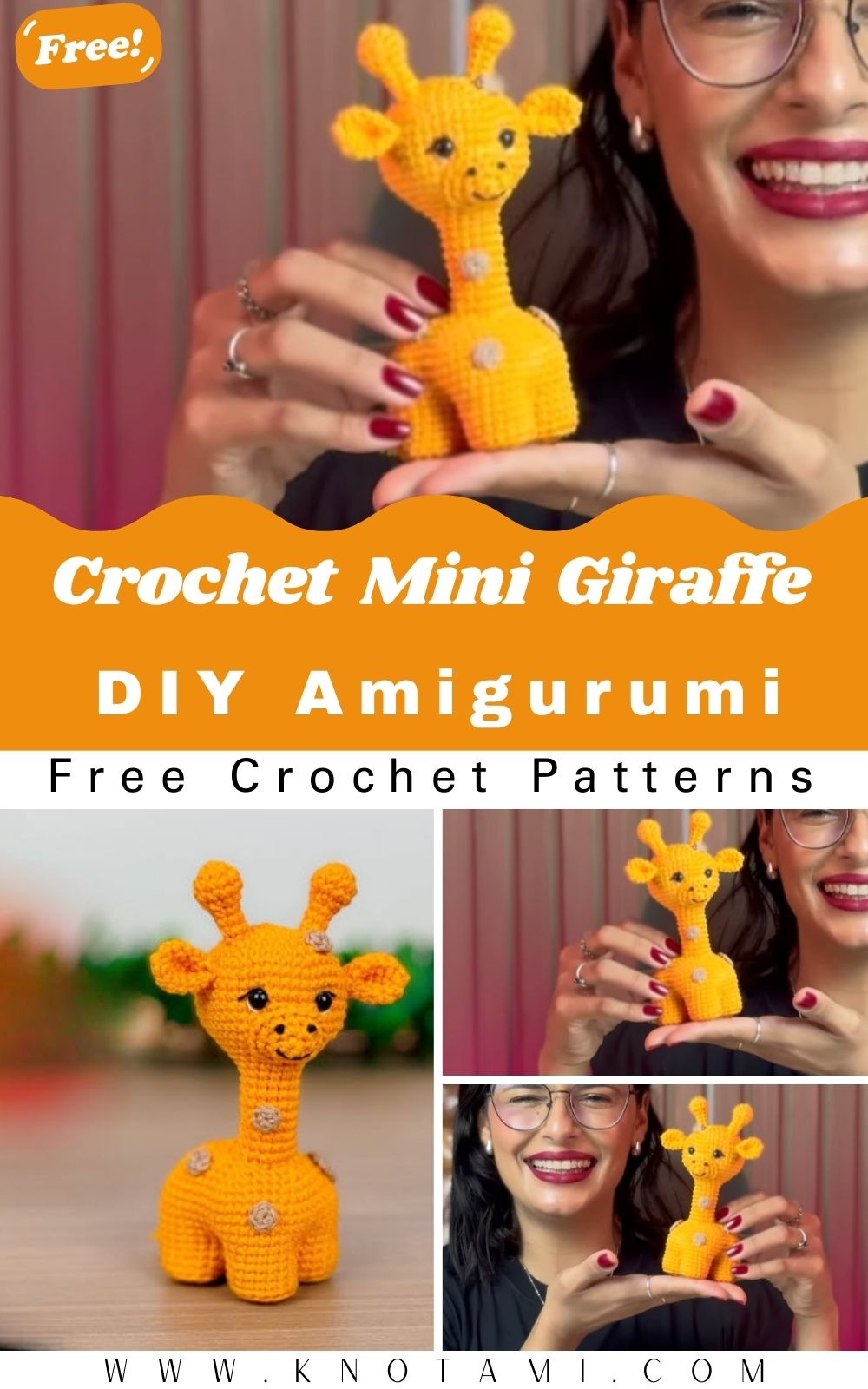
A long neck little horns and playful brown spots turn ordinary yarn into a cheerful companion in this cute crochet giraffe amigurumi pattern with a step-by-step guide. It’s a lovely make for gifting or for growing your own toy collection, and the spots give every giraffe its own personality.
Giraffes are a favorite amigurumi animal for good reason. Their tall necks and patchy coats look wonderful in yarn. This design is made in simple separate pieces with only single crochet, and it includes clear checks along the way so your finished giraffe stands up straight instead of tipping over.
Crochet Giraffe Amigurumi Overview
The giraffe is made in pieces: head, neck, body, four legs, two ears, two ossicones (the little horns), a tail, a mane and spots. Everything is sewn together at the end. The finished toy has a rounded head, a tall neck, a compact body and slim standing legs.
- Skill level: Intermediate. The stitches are beginner-friendly, but matching the legs and joining the neck take a bit more patience than a simple round animal.
- Finished size: Roughly 7 to 8 inches tall to the tips of the horns at the gauge below. Your own tension will change this a little.
Materials
- Yarn: Worsted weight (#4) acrylic or cotton blend
- Main color (tan or golden yellow): About 80–100 g for the head, neck, body and legs
- Spot color (brown): About 15–20 g
- Mane color (brown or dark tan): About 10 g
- Hoof color (dark brown or black): Under 5 g
- Hook: 3.25 mm (US D/3). This is smaller than the yarn label suggests, so the fabric is tight and the stuffing stays hidden.
- Eyes: 12 mm safety eyes
- Stuffing: Polyester fiberfill
- Notions: Stitch markers, tapestry needle, scissors, pins, and a chopstick for stuffing
- Optional: A pipe cleaner for neck support
Gauge: About 5 sc and 5 rounds to 1 inch, worked tightly. For amigurumi, gauge matters more for fabric density than exact size. Aim for a fabric with no visible gaps.
Abbreviations
- MR – magic ring
- ch – chain
- sc – single crochet
- inc – increase (2 sc in one stitch)
- dec – invisible decrease
- st(s) – stitch(es)
- rnd – round
Before You Start
The whole giraffe is worked in single crochet in continuous spiral rounds. Keep a stitch marker in the first stitch of every round. This matters most on the neck, where a long tube of identical rounds makes it easy to lose count.
Use the invisible decrease throughout instead of a standard sc2tog. It keeps the shaping smoother, which shows most on small pieces like the ears and horns.
Make the pieces in the order given. The head comes first so you can test the eye placement early, and the legs are made in pairs so you can compare them as you go.
Step-by-Step Giraffe Pattern
Step 1: Head
- Rnd 1: 6 sc in MR (6)
- Rnd 2: inc in each st around (12)
- Rnd 3: (sc, inc) around (18)
- Rnd 4: (2 sc, inc) around (24)
- Rnd 5: (3 sc, inc) around (30)
- Rnds 6–11: sc around (30)
- Rnd 12: (3 sc, dec) around (24)
- Rnd 13: (2 sc, dec) around (18)
Insert the safety eyes between Rounds 8 and 9, the same number of stitches out from the center front on each side. Push the washers on fully. Before continuing, look at the head straight on, not just from above. A slight tilt often only shows at eye level.
- Rnd 14: (sc, dec) around (12). Stuff firmly.
- Rnd 15: dec around (6). Fasten off and weave the tail through the last stitches to close.
Step 2: Neck
- Rnd 1: 6 sc in MR (6)
- Rnd 2: inc around (12)
- Rnds 3–14: sc around (12)
Stuff firmly as you go rather than waiting until the end. Pack the stuffing down with the blunt end of a chopstick. The closed, rounded end is the top, where the head sits. Fasten off with a long tail at the open end.
Step 3: Body
- Rnd 1: 6 sc in MR (6)
- Rnd 2: inc around (12)
- Rnd 3: (sc, inc) around (18)
- Rnd 4: (2 sc, inc) around (24)
- Rnds 5–12: sc around (24)
- Rnd 13: (2 sc, dec) around (18)
Stuff the body firmly and fasten off with a long tail. Leave the 18-stitch opening at the top unclosed, because the neck will be sewn over it later.
Step 4: Legs (make 4, in two pairs)
- Rnd 1: 6 sc in MR (6)
- Rnd 2: inc around (12)
- Rnds 3–10: sc around (12)
For hooves, work Rounds 1–2 in the hoof color, then switch to the main color from Round 3. Stuff each leg firmly and flatten the top slightly so it sits neatly against the body.
After the first two legs, lay them side by side and check three things: round count, stuffing firmness and tension. A leg made while you’re tired often comes out looser. Only start the second pair once the first pair matches, and use them as your reference.
Step 5: Ears (make 2)
- Rnd 1: 6 sc in MR (6)
- Rnd 2: inc around (12)
- Rnds 3–4: sc around (12)
Don’t stuff. Fold the ear flat and sc across the opening through both layers to close it. Leave a tail for sewing.
Step 6: Ossicones / Horns (make 2)
- Rnd 1: 4 sc in MR (4)
- Rnds 2–3: sc around (4)
For a darker tip, work Round 1 in brown, then switch to the main color for Rounds 2–3. Fasten off with a long tail.
Step 7: Tail
Ch 8, sc in the 2nd ch from the hook and in each ch across (7 sc). Fasten off. Knot a few short strands of brown yarn to the end and trim them into a little tuft.
Step 8: Mane
The mane runs from just behind the ears down the back of the neck, about 3 to 3.5 inches long. The easiest way to make it is with fringe. Fold short pieces of mane-color yarn in half and knot each one through a stitch in a line down the back of the neck, then trim them to an even length. If you prefer, crochet a narrow strip of loop stitch that length and sew it on instead.
Step 9: Spots
Make a handful of small flat circles in brown. For small spots, work 6 sc in a MR and fasten off. For bigger ones, add a round of increases (12). Mix both sizes for a more natural coat. Leave a tail on each for sewing.
Before sewing any spots down, lay them loosely on the body and neck and step back a few feet. Aim for slightly uneven sizes and spacing, because a perfect grid looks less natural. Take a quick photo of the layout you like, then sew each spot in place.
Step 10: Assembly
- Legs first: Pin all four legs to the underside of the body. Set the giraffe on a flat surface, nudge it gently, and see if it leans. Adjust the leg positions now, before the neck adds weight up top. Then sew them on.
- Neck: Place the open end of the neck over the body’s 18-stitch opening. Pin it at four evenly spaced points, then sew around, easing the extra body stitches in evenly. Top up the stuffing just before closing the seam so the join stays firm.
- Head: Sew the head onto the rounded top of the neck, again pinning at four points first.
- Details: Add the ears on the sides of the head, the horns on top between them, the tail at the back of the body, then the mane and spots.
Stitch Count Checkpoints
- Head: 6 stitches in the last round before closing
- Neck: 12 stitches at the open end
- Body: 18 stitches at the top opening
- Legs: 12 stitches across 10 rounds each, with both pairs matching
Supporting the Neck
The neck is the giraffe’s weak point, so you have a few options.
- Dense stuffing only: This is the simplest option and is usually enough for a neck this length worked tightly.
- Pipe cleaner support: Push one through the center of the neck before stuffing. It gives firm support but adds a little bulk. Fold the ends over so no sharp tips can poke through, and skip this for a baby’s toy.
- Tighter tension: Working the neck rounds extra tightly reduces flex without adding anything inside.
Common Mistakes
- Skipping the side-by-side leg check and finding a mismatch after sewing
- Attaching the neck before testing that the giraffe stands
- Overstuffing the head compared to the neck, which makes it top-heavy
- Crowding spots together instead of laying them out first
- Placing the eyes without counting from the center front
Troubleshooting
- Stuffing shows through: Your tension is loose for the yarn. Use a smaller hook or tighten your stitches.
- The neck flops or leans: It needs denser stuffing, tighter rounds or a pipe cleaner. If the head tips forward, check that it isn’t heavier than the neck can hold.
- The giraffe rocks or tips: The legs are uneven. Compare them on a table and fix the round count on the short one, rather than adding extra stuffing to make up the difference.
- Lumpy limbs: The stuffing went in big clumps. Add small pieces at a time and squeeze gently to check.
- A pucker at a join: The stitches weren’t spaced evenly. Pin at four points around the join first, then sew between them.
- Crooked eyes: Count the same number of stitches from the center front to each eye before inserting them.
- A different yarn weight: Bulkier yarn blurs the spots, and thinner yarn makes a smaller giraffe. Swatch first and change your hook to match.
Finishing and Safety
Weave in all ends by running them through several stitches in different directions, so they don’t work loose. Check that every eye washer is pushed on tightly and every part is sewn on firmly. For a baby or toddler, embroider the eyes instead of using safety eyes, and leave out the pipe cleaner.
If you used cotton blend yarn, a light steam helps the legs and body hold a rounder shape. Acrylic usually doesn’t need it.
Washing and Care
Hand wash gently in cool water, or spot clean. Reshape the giraffe and lay it flat to dry. Hanging it while damp can stretch the neck and legs.
Make a Mama and Baby Giraffe Pair
A second, smaller giraffe beside the first makes a sweet family set, and it’s easy because you don’t need to change the pattern.
- Change the yarn, not the rounds: Make the baby in DK or sport weight yarn with a smaller hook, around 2.5 mm, following the same rounds.
- Use smaller eyes: Around 8 mm safety eyes suit the smaller head.
- Try a softer shade: A paler yellow for the baby helps the pair stand apart.
- Use fewer, smaller spots: Stick to the 6-stitch spots on the baby.
- Pose them together: Angle the baby’s neck slightly toward the mama when you sew it on, so they look like they’re leaning in.
For more safari and farm friends, try the crochet lion cub, the mini cow amigurumi and the two-inch crochet horse. If you love giraffes, the giraffe curtain tie amigurumi is a fun way to use the same theme in home decor.
FAQs
How do I keep the neck from flopping over?
Stuff it densely and evenly, packing it down with a chopstick. If it still leans, add a pipe cleaner down the center.
Why does my giraffe tip over?
Usually the legs are different lengths or stuffed unevenly. Compare all four side by side before sewing them on, and test the balance before adding the neck.
Can I use a different yarn weight?
Yes, but the size and proportions will change. Swatch first and choose a hook that keeps the fabric tight.
How do I place the safety eyes evenly?
Pick the center front stitch, count the same number of stitches out on each side, and insert both eyes in the same round.
Standing Tall and Ready to Gift
Most of this giraffe’s charm comes from two places: a neck that holds its head high and four legs that keep it steady. Take your time on those, and the ears, horns, and spots come together quickly. Before long, you’ll have a tall, spotted friend ready for a nursery shelf or a very happy recipient.