
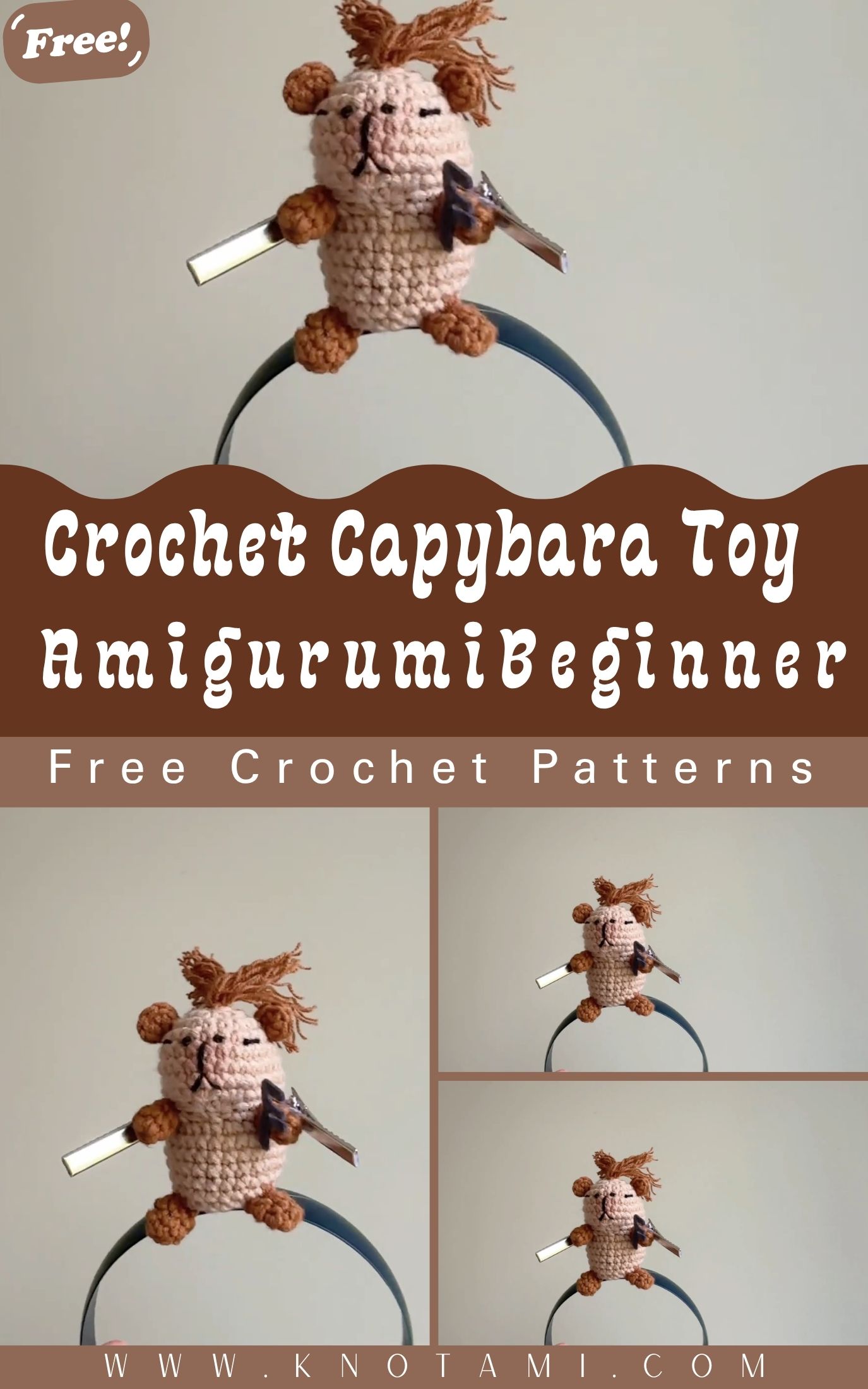
If you want to make a cute crochet amigurumi toy that you can complete easily and without stress, this capybara is the perfect choice. It’s a beginner-friendly pattern, quick to make, and can also be used as a cute gift or shelf decoration. Plus, it helps you practice neat and precise shaping.
This beginner-friendly capybara amigurumi adds a soft and adorable touch to your crochet routine. It teaches you basic skills like strong single crochet, simple increases, and smooth decreases, making your finishes cleaner and more beautiful. With this easy pattern, you can create a cute desk buddy, a child-safe plush toy, or a beautiful handmade gift. This design also fits easily into a “cute animal” collection with other crochet plush toys, and since its shapes are simple, you can better focus on confidence and consistency while sewing.
Supplies Needed
Gather everything first; therefore, you can crochet without stopping mid-round.
- Yarn: Worsted (medium/#4) cotton or acrylic in
- Main color: capybara brown/tan
- Accent: cream/beige (optional for muzzle/belly)
- Crochet hook: 3.0–4.0 mm (choose a smaller hook than the yarn label for tight fabric)
- Stuffing: Polyester fiberfill
- Eyes: 6–10 mm safety eyes or black embroidery thread for stitched eyes (kid-safe option)
- Nose detail: Brown/black embroidery floss or small felt piece
- Tapestry needle: For sewing and weaving ends
- Stitch marker: Locking marker or scrap yarn
- Scissors
- Optional:
- Felt for tiny ears/nose
- Blush or fabric crayon for cheeks
- Pipe cleaner (only for decor pieces, not kids’ toys)
Methodology (Beginner Friendly)
I’m keeping this method friendly and flexible. Additionally, you can adjust size by switching yarn weight and hook size.
1: Start with the body (simple oval “capsule” shape)
- Make a magic ring (or chain 2 and work into the first chain).
- Crochet single crochet (sc) in continuous rounds.
- Increase evenly for a few rounds to build a rounded base.
- Then, work even rounds to create the “barrel” body.
- Finally, decrease evenly to close.
Beginner note: Keep stitches snug; therefore, stuffing won’t show through. Meanwhile, use a stitch marker to track the first stitch of each round.
2: Add the head (rounded with a gentle snout)
- Start another magic ring and increase to form a dome.
- Work a few even rounds for height.
- If you want a snout, add a small increase section at the front area (or sew on a small muzzle piece later).
- Place eyes before closing the head.
- Stuff firmly, then decrease to finish.
Tip: Place eyes between two rounds, about 6–10 stitches apart depending on size. Moreover, keep them slightly forward to capture that calm capybara expression.
3: Crochet tiny ears (fast + forgiving)
- Make a small magic ring.
- Work 4–6 sc into the ring.
- Fold the circle in half and stitch the base closed.
Alternatively, crochet a small oval ear for a softer look. In addition, you can use felt ears if you prefer quick assembly.
4: Make stubby legs (4 simple pieces)
- Start a magic ring.
- Increase slightly, then crochet a few even rounds.
- Lightly stuff (or leave unstuffed for extra squish).
- Close the top flat.
Because capybaras look cute with short legs, you don’t need complex shaping. As a result, beginners get a clean finish without frustration.
5: Crochet a tiny tail (optional)
Capybaras have minimal tails; therefore, a tiny nub works perfectly.
- Chain 2, sc in the second chain, then fasten off.
6: Assemble (this is where it becomes “capybara”)
- Sew the head to the body with a tapestry needle using a whip stitch or mattress stitch.
- Position the head slightly forward; moreover, it improves the silhouette.
- Attach ears on the top sides of the head.
- Sew legs to the underside: two near the front, two near the back.
- Add nose and mouth with embroidery floss. For example, stitch a tiny horizontal nose and a short vertical line for a gentle smile.
- Weave in all ends securely.
Finishing: Shape with your hands after stuffing. Meanwhile, check symmetry from the front and side before tightening final stitches.
Design, Style & Features
This capybara amigurumi shines because it keeps everything simple while still looking unmistakably “capy.” Additionally, the rounded body gives it a plush, huggable feel, and the small ears add instant personality. I love using cotton yarn for a slightly matte, modern texture; however, acrylic makes it extra soft and squishy. If you use a smaller hook, you’ll get tighter stitches and a smoother surface. As a result, the toy looks neater and holds its shape longer.
Key features you’ll notice:
- Calm face (small eyes, subtle nose) for a soothing vibe
- Chunky body for an adorable, desk-friendly size
- Minimal parts so finishing feels manageable
- Customizable details like cheeks, muzzle patches, or a tiny tuft
Uses & Benefits
You can do a lot with a small capybara plush. Therefore, it’s one of my favorite beginner projects.
a toy
- The compact shape fits small hands easily.
- Additionally, you can choose stitched eyes for a safer baby-friendly version.
- The tight single crochet fabric makes it sturdier for gentle play.
a gift idea
- Make one as a birthday present, stocking stuffer, or “just because” surprise.
- Moreover, capybaras feel trendy and universally cute, so they work for kids, teens, and adults.
- Pair it with a card that says “Stay calm, capy on” for a fun theme.
decor
- Set it on a nightstand, shelf, or craft room desk.
- In addition, you can crochet a few in different shades to create a small animal lineup.
- Add a tiny scarf or mini hat for seasonal decor.
Practical value (why it’s worth crocheting)
- You practice essential amigurumi skills in one project.
- As a result, you’ll feel ready for more advanced plush patterns.
- You also get a finished piece you can photograph, gift, or sell (if you create your own finished items and follow any pattern/video usage rules).
Tips for Beginners for ( Crochet Capybara Toy)
If you’re new to Crochet Capybara Toy, these habits will instantly improve your results.
- Use a smaller hook than usual. Additionally, tight stitches prevent gaps where stuffing shows.
- Count every round. Moreover, stitch counts stop your toy from twisting or leaning.
- Mark the first stitch. Therefore, you always know where the round begins.
- Learn invisible decrease (dec). It looks cleaner than a standard decrease, and it reduces bumps.
- Stuff slowly and shape as you go. Meanwhile, push stuffing into curves with the back of your hook.
- Pin parts before sewing. For example, use sewing pins to test leg placement, then stitch once you like the stance.
- Choose the right eyes for the recipient. However, if a child under three will use it, stitched eyes are the safest choice.
- Weave in ends securely. In addition, hide knots inside the stuffing area so the finish looks professional.
FAQs for ( Crochet Hydrochoerus hydrochaeris Toy)
1) Is this crochet Giant rodent pattern suitable for absolute beginners?
Yes. This crochet Giant rodent pattern uses basic single crochet, simple increases, and simple decreases. Additionally, you can keep the details minimal, so you finish confidently even if it’s your first beginner amigurumi tutorial.
2) What yarn works best for a crochet plush toy like this?
Worsted cotton gives crisp stitches and great definition. However, acrylic yarn feels softer and often costs less. In addition, plush/velvet yarn looks adorable, although it hides stitches and can challenge beginners.
3) How do I stop holes from appearing in my easy amigurumi pattern?
Use a smaller hook size, keep consistent tension, and avoid over-stuffing. Moreover, learn the invisible decrease to prevent gaps during shaping. As a result, your Crochet Capybara Toy will look smooth and tidy.
4) Can I make this capybara bigger or smaller?
Absolutely. Therefore, swap yarn weight and hook size: chunky yarn makes a larger plush, while DK yarn makes a smaller one. Additionally, you can add a few extra increase rounds to widen the body if you want a “chonky” capybara.
5) How long will this beginner crochet pattern take?
Most beginners finish it in a weekend. Meanwhile, confident crocheters may complete it in a few hours. Time depends on your pace and how much detail you add to the face and assembly.
Final Thoughts
This crochet capybara toy keeps amigurumi fun, simple, and beginner-friendly. Moreover, it teaches the exact skills that help you level up fast: consistent single crochet, clean shaping, and easy assembly. Therefore, you can make one for play, gift one to a capybara fan, or style a cute shelf display. In addition, you can personalize colors and facial details, so every capybara turns out unique.