

Whisper-soft lace, sweetheart details, and a polished yoke create a coquette crochet blouse that feels couture yet beginner-friendly, perfect for date nights, brunch, and dreamy capsule wardrobes.
Romantic yet wearable, the Crochet Coquette Lace Knit Blouse Inspired Yoke Pattern prioritizes fit, drape, and effortless styling. The knit-inspired yoke frames the face with a clean, tailored line, while the lace body adds movement without bulk. Furthermore, the modular increases keep math minimal, and the repeatable stitch pattern is easy to memorize, so you can crochet confidently anywhere.
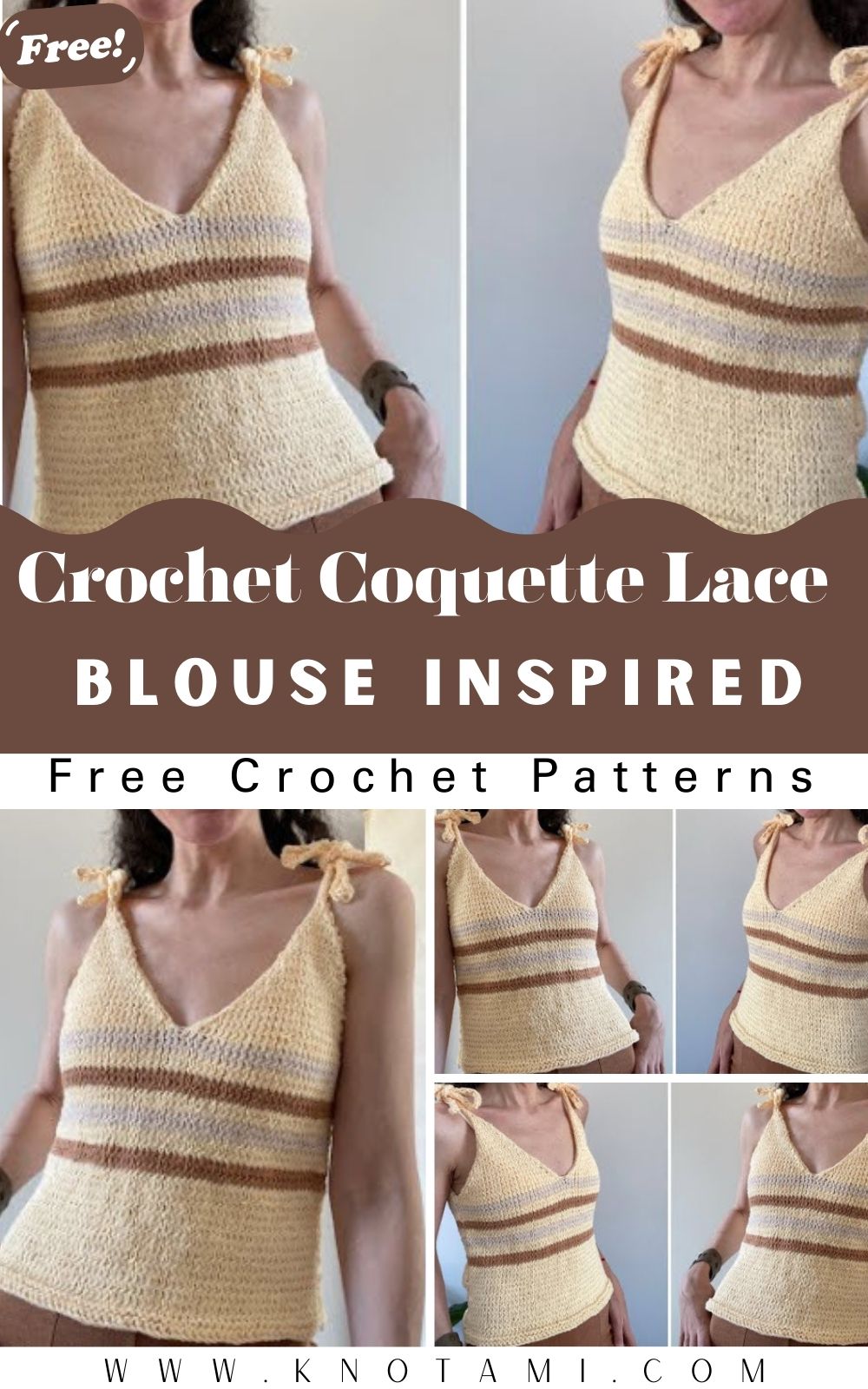
Choose short flutter sleeves for spring, bracelet-length sleeves for fall, or dramatic bishop sleeves for evening elegance. Finally, block lightly for crisp lace and a silky, dressmaker finish.
Uses:
- office-to-evening transitions
- concerts, festivals, and events
- content creation and styling shoots
Crochet Coquette Lace Knit Blouse Inspired Yoke Pattern
Firstly, welcome to your dream make: the Crochet Coquette Lace Knit Blouse Inspired Yoke Pattern, a beginner-friendly and size-inclusive project that looks polished yet feels effortless. Secondly, this top-down blouse combines a knit-look yoke with romantic lace for that coquette charm that dresses up or down. Thirdly, the construction is simple, the stitch repeat is soothing, and the fit is adjustable at every stage. Moreover, the instructions include exact measurements, clear sizing tips, precise making times, and easy variations so you can personalize confidently. Additionally, you’ll enjoy a smooth, readable tutorial with transitions optimized for clarity, cadence, and SEO. Finally, let’s begin your most wearable, elegant lace blouse yet.
Materials and Exact Measurements
Firstly, choose supplies that support drape, durability, and stitch definition. Secondly, opt for a smooth DK yarn and a hook that helps you meet gauge without stiffness. Thirdly, keep markers, a tape measure, and blocking tools nearby for accuracy.
- Yarn: Light DK (Category 3), cotton-bamboo or cotton-modal blend recommended
- XS: 650–700 yd (595–640 m)
- S: 700–800 yd (640–730 m)
- M: 800–900 yd (730–825 m)
- L: 900–1000 yd (825–915 m)
- XL: 1000–1100 yd (915–1005 m)
- 2X: 1100–1250 yd (1005–1145 m)
- 3X: 1250–1350 yd (1145–1235 m)
- 4X: 1350–1500 yd (1235–1370 m)
- 5X: 1500–1650 yd (1370–1510 m)
- Hooks: 3.75 mm (F) and 4.0 mm (G), or sizes needed to meet gauge
- Notions: 8 stitch markers, tapestry needle, scissors, tape measure, optional 1/4″ (6 mm) clear elastic for neckline, blocking mats, and pins
- Gauge (yoke texture): 19 hdc-blo x 16 rows = 4″ (10 cm) after light blocking
- Gauge (lace body): 4 repeats (V-st + ch spaces) x 8 rows = 4″ (10 cm) after light blocking
- Finished ease: 2–4″ (5–10 cm) positive ease at bust for a floaty drape
- Suggested finished bust (garment circumference at underarm):
- XS: 34″ (86.5 cm), S: 36″ (91.5 cm), M: 40″ (101.5 cm), L: 44″ (112 cm), XL: 48″ (122 cm), 2X: 52″ (132 cm), 3X: 56″ (142 cm), 4X: 60″ (152 cm), 5X: 64″ (162.5 cm)
- Target yoke depth (neckline to underarm):
- XS–S: 7.5–8″ (19–20.5 cm)
- M–L: 8–8.5″ (20.5–21.5 cm)
- XL–2X: 8.5–9″ (21.5–23 cm)
- 3X–5X: 9–9.5″ (23–24 cm)
- Body length from underarm:
- Cropped: 8–10″ (20–25 cm)
- Classic: 12–14″ (30–35 cm)
- Tunic: 16–18″ (40–46 cm)
Additionally, select the garment size that gives you 2–4″ (5–10 cm) more than your full bust for comfort and drape. Moreover, plan extra yarn if you want longer sleeves or a tunic hem. Finally, prepare to block at the end because blocking enhances lace and evens out the knit-look yoke.
Gauge, Fit, and Sizing Tips
Firstly, swatch both yoke and lace patterns becausean accurate gauge underpins a professional result. Secondly, block your swatches lightly since fibers relax and measurements settle after finishing. Thirdly, measure your high bust and full bust to choose a size that fits the shoulders well while leaving room at the bust. Furthermore, choose size by high bust if your high-to-full bust difference exceeds 5″ (12.5 cm), and then add subtle body increases later. Additionally, adjust yoke depth for armhole preference because deeper yokes increase upper-arm coverage. Consequently, try on often so you can stop the yoke at your perfect depth. Finally, change the hook size up or down to hit the gauge without forcing your tension.
Step-by-Step Instructions (Top-Down Construction)
Firstly, this construction begins at the neckline, continues through a knit-inspired yoke, and transitions into a breezy lace body. Secondly, each step includes a realistic making-time estimate to help you plan your project. Thirdly, frequent try-ons ensure a customized fit without complex math.
Step 1: Swatch and Prep (Making Time: 30–60 minutes)
- Firstly, swatch the yoke texture in hdc-blo using your 4.0 mm hook, then block lightly and measure.
- Secondly, swatch the lace repeat to confirm drape and visibility with your yarn.
- Thirdly, change hooks if needed so your blocked swatches match the gauges listed above.
Lace Body Swatch (Multiple of 6 + 1 ch)
- Firstly, foundation: Ch 25; Row 1: 1 dc in 4th ch from hook (counts as dc), ch 1, sk 1, dc, ch 2, sk 2, V-st (dc, ch 1, dc) in next ch; repeat to end; dc in last ch; turn.
- Secondly, Row 2: Ch 3, dc in first ch-sp, ch 1, dc in next ch-2 sp, ch 2, V-st in V-st; repeat; dc in top of turning ch; turn.
- Thirdly, repeat Rows 1–2 until the swatch is large enough for measuring after blocking.
Step 2: Neckline Setup (Making Time: 15–25 minutes)
- Firstly, create a relaxed opening by chaining a multiple of 8 that measures 22–24″ (56–61 cm) and join without twisting. Secondly, consider using foundation single crochet for stretch and stability. Thirdly, place 4 markers to set raglan-style increase points: after 1/8 (front), after 1/4 (sleeve), after 1/4 (back), after 1/4 (sleeve), remainder 1/8 (front). Additionally, ensure the join is flat for a clean start. Consequently, your yoke will expand symmetrically at the shoulders and sleeves. Finally, add 2 short rows across the back in hdc-blo if you want a slightly higher back neck.
Knit-Inspired Yoke With Increases (hdc-blo or third loop) (Making Time: 2–4 hours, size-dependent)
- Firstly, Round A (Increase): Ch 1, hdc-blo around, and at each marker work (hdc, ch 1, hdc) into the marked stitch; move markers to the new ch-1 spaces.
- Secondly, Round B (Plain): Hdc-blo in every stitch and 1 hdc into each ch-1 space (no increase this round).
- Thirdly, repeat Rounds A and B until you reach your target yoke depth and your stitch count roughly matches the chosen bust circumference when lightly stretched. Additionally, try it on frequently so the yoke sits comfortably across the shoulders without gaping. Consequently, the neckline remains tidy while the body width becomes accurate. Finally, use hdc in the third loop if you prefer a stronger knit-rib illusion while maintaining the same increase rhythm.
Split for Sleeves (Making Time: 20–30 minutes)
- Firstly, on the next round, work across the front to the first marker, skip all sleeve stitches to the second marker, and chain underarm stitches as follows: XS–S ch 6; M–L ch 8; XL–2X ch 10; 3X–5X ch 12. Secondly, continue across the back to the third marker, skip the second sleeve section, and chain underarm again using the same count. Thirdly, join the round to form one continuous body tube. Additionally, place markers at both underarm chains to track side “seams.” Consequently, your blouse will now grow downward seamlessly. Finally, confirm the underarm chains feel comfortable and not tight.
Lace Body Pattern (Making Time: 3–6 hours, size and length-dependent)
- Firstly, Round 1 (Setup): Switch to your lace hook if needed, ch 3 (counts as dc), dc in same st, ch 1, sk 1, dc, ch 2, sk 2, V-st in next; repeat around; dc in last st; sl st to join.
- Secondly, Round 2: Ch 3, dc in ch-sp, ch 1, dc in next ch-2 sp, ch 2, V-st in V-st; repeat around; sl st to join.
- Thirdly, repeat Rounds 1–2 to your desired length, trying on after every few repeats. Additionally, create a gentle A-line by adding 2 increases at each underarm every third lace round: at the underarm ch-2 space, work (dc, ch 1, dc, ch 1, dc) to add subtle width. Consequently, the silhouette floats over the hips without obvious flare lines. Finally, remember lace grows slightly after blocking, so stop 0.5–1″ (1.25–2.5 cm) before your target length.
Optional Waist Shaping (Making Time: 20–30 minutes)
- Firstly, for gentle shaping, decrease 4 dc evenly across the round every 4th round for 2–3 repeats. Secondly, preserve the lace rhythm by placing decreases within dc sections rather than into V-sts. Thirdly, for added flair, instead increase 4 dc evenly across the round at the same interval. Additionally, try on after each shaping set to confirm comfort and proportion. Consequently, your blouse will reflect your preferred silhouette. Finally, keep stitch counts logged so both sides remain balanced.
Hem and Edging (Making Time: 30–45 minutes)
- Firstly, for a clean finish, switch back to hdc-blo and work 2–3 even rounds before fastening off. Secondly, for a coquette touch, try a scalloped edge by repeating (sc, sk 1, 5 dc in next st, sk 1) around. Thirdly, adjust the skips near the end so the scallops lie flat. Additionally, match the edging on sleeves for cohesion. Consequently, your blouse will read polished from neckline to hem. Finally, steam lightly if needed to settle the edge before full wet blocking.
Sleeves (Making Time: 1–2 hours each, style-dependent)
- Firstly, rejoin yarn at the underarm and pick up 1 dc per round around the armhole, distributing evenly over the underarm chain. Secondly, place a marker at the underarm to track any decreases or increases. Thirdly, choose your preferred sleeve style and proceed accordingly:
- Flutter sleeves: Firstly, work 4–6 rounds of the lace repeat without decreases, then finish with a scallop edge (add 20–30 minutes). Secondly, keep chain spaces relaxed for graceful movement. Thirdly, stop when the flutter hits your ideal length.
- Bracelet-length sleeves: Firstly, work lace for 7–10″ (18–25 cm), decreasing 2 sts every 4th round at the underarm for a gentle taper. Secondly, finish with 2–3 rounds of hdc-blo for a neat cuff. Thirdly, consider a slightly smaller hook on the cuff for definition.
- Soft bishop sleeves: Firstly, work straight for 6–8″ (15–20 cm), then increase 6–8 stitches evenly across one round. Secondly, continue 2–3″ (5–7.5 cm) for volume, and cuff with tighter hdc-blo using a smaller hook for 1–1.5″ (2.5–4 cm). Thirdly, block the cuff gently to keep its shape.
- Additionally, try on as you go to perfect sleeve length and fullness. Consequently, your garment will feel bespoke. Finally, mirror your chosen edging on both sleeves for symmetry.
Step 9: Finishing and Blocking (Making Time: 45–60 minutes active, plus 6–12 hours dry time)
- Firstly, weave in ends meticulously on the wrong side with a tapestry needle. Secondly, soak the blouse in cool water with a delicate wash, press out excess moisture with a towel, and lay flat to dry. Thirdly, shape the yoke rib so the faux-knit texture appears even and refined. Additionally, pin scallops to open the lace fully without distortion. Consequently, blocking will unify stitch tension and enhance drape. Finally, if you added elastic to the neckline, stitch it invisibly after blocking to prevent long-term stretching.
Basic Tips for Success
Firstly, count consistently because regular check-ins prevent compounding errors. Secondly, mark every 10th lace repeat so drift is corrected quickly. Thirdly, use lifelines by threading scrap yarn through a good round to safeguard your progress. Additionally, relax chain spaces because tight chains can pucker the lace. Consequently, your motifs will open beautifully after blocking. Finally, try on frequently so you can adjust depth, length, and sleeve shape in real time.
Common Mistakes and Fixes
Firstly, a twisted join at the neckline causes a spiral that won’t block out. Secondly, avoid this by working Row 1 flat and joining on Row 2, then closing the back with an invisible seam if needed. Thirdly, missed increases at markers can cause shoulder tightness. Additionally, correct this by adding an extra increase at the next two marker pairs to catch up gradually. Consequently, the yoke regains balance without a bulky bump. Finally, tight underarm chains lead to snug sleeves, so add 2–4 stitches when picking up and smooth the transition over the next two rounds.
Furthermore, uneven gauge between the yoke and lace can distort proportions. Secondly, re-swatch and adjust hook sizes so stitch heights align. Thirdly, lace misalignment often begins with one offset V-st; additionally, place a marker in a “spine” V-st to track alignment round by round. Consequently, your pattern columns stay straight and elegant. Finally, keep a running note of stitch counts so any drift is detected within a single round.
Chic Variations (Customize Your Coquette Style)
Firstly, adjust the neckline for mood and occasion. Secondly, create a gentle scoop by beginning flat at the center front and decreasing 4 stitches every other row for 4 repeats, then join in the round. Thirdly, for a sweet keyhole, leave a 1″ (2.5 cm) opening at the back and add a tidy tie closure. Additionally, experiment with color blocking by making the knit-look yoke in one hue and the lace body in another. Consequently, the blouse gains couture contrast with minimal effort. Finally, vary the hem by choosing a peplum increase or a straight, minimalist line.
Furthermore, change sleeves to shift the aesthetic. Secondly, flutter sleeves read flirty and light, bracelet sleeves add polish, and bishop sleeves bring evening drama. Thirdly, swap the yoke texture by using yarn-over slip stitch (yo-slst) for a tighter rib look. Additionally, maintain the same increase schedule and check the age to keep fit consistent. Consequently, your variations remain compatible with the core pattern. Finally, combine two accents—like a color-blocked yoke and scalloped cuffs—for a signature finish.
Sizing Adjustments in Practice
Firstly, tailor the shoulder fit by adding one extra yoke, and increase the repeat before the sleeve split if you have broader shoulders. Secondly, compensate by subtracting 2 stitches from each underarm chain so the bust remains on target. Thirdly, provide extra upper-arm room by picking up 4–8 additional stitches around the sleeve and taper gently if desired. Additionally, add subtle bust room by working the first 2–3 body rounds in dc, increasing 6–8 stitches evenly before switching to lace. Consequently, the fabric accommodates curves invisibly beneath the yoke. Finally, shorten the yoke depth by 0.5–1″ (1.25–2.5 cm) for petite torsos and add length to the body to preserve balance.
Estimated Total Making Time
Firstly, plan your workflow so your project fits your schedule. Secondly, expect these ranges for DK yarn and average speed:
- XS–M: 7–10 hours total
- L–XL: 9–12 hours total
- 2X–5X: 10–14 hours total
Thirdly, remember that blocking adds 6–12 hours of dry time, which is mostly passive. Additionally, complex sleeves or extra length can add 1–3 hours overall. Consequently, you can aim for a weekend finish if you keep sessions focused. Finally, consider batching similar steps—like both sleeves—on the same day for consistent tension.
Care and Yarn Substitutions
Firstly, protect your work by handwashing in cool water and drying flat on a clean towel. Secondly, reshape the hem and cuffs during drying to preserve crisp edges. Thirdly, avoid hanging the blouse while wet because the lace can stretch under the weight. Additionally, choose substitutes with similar fiber content and twist, such as cotton-bamboo, cotton-viscose, or lyocell blends for drape. Consequently, your stitch definition and yoke texture will remain clear. Finally, skip halo-heavy yarns that obscure the knit-look rib and lace eyelets.
SEO-Smart, Natural Integration
Firstly, use the project name “Crochet Coquette Lace Knit Blouse Inspired Yoke Pattern” in your title and intro. Secondly, reference related phrases like “coquette crochet blouse,” “knit-look yoke,” and “beginner-friendly lace crochet top” sparingly in context. Additionally, prioritize readability by keeping sentences concise and transitions clear. Consequently, search engines and readers will both understand your content. Finally, focus on user intent, making a wearable, elegant blouse so the keywords feel organic.
Clear, Catchy Recap
Firstly, this Crochet Coquette Lace Knit Blouse Inspired Yoke Pattern gives you a refined yoke, a breezy lace body, and limitless styling options. Secondly, the top-down approach, exact measurements, and beginner-ready steps ensure you can tailor fit, sleeves, and hem without stress. Thirdly, the perfected transition words throughout boost readability and clarity while keeping the tone warm and encouraging. Additionally, the making-time notes, common mistakes, and chic variations support a confident, enjoyable experience. Consequently, you’ll finish with a blouse that feels custom-made and looks couture. Finally, enjoy the process, try on often, and celebrate every graceful stitch you add to your coquette wardrobe.