Crochet Giraffe Curtain Tie Amigurumi Pattern for Nursery Decor
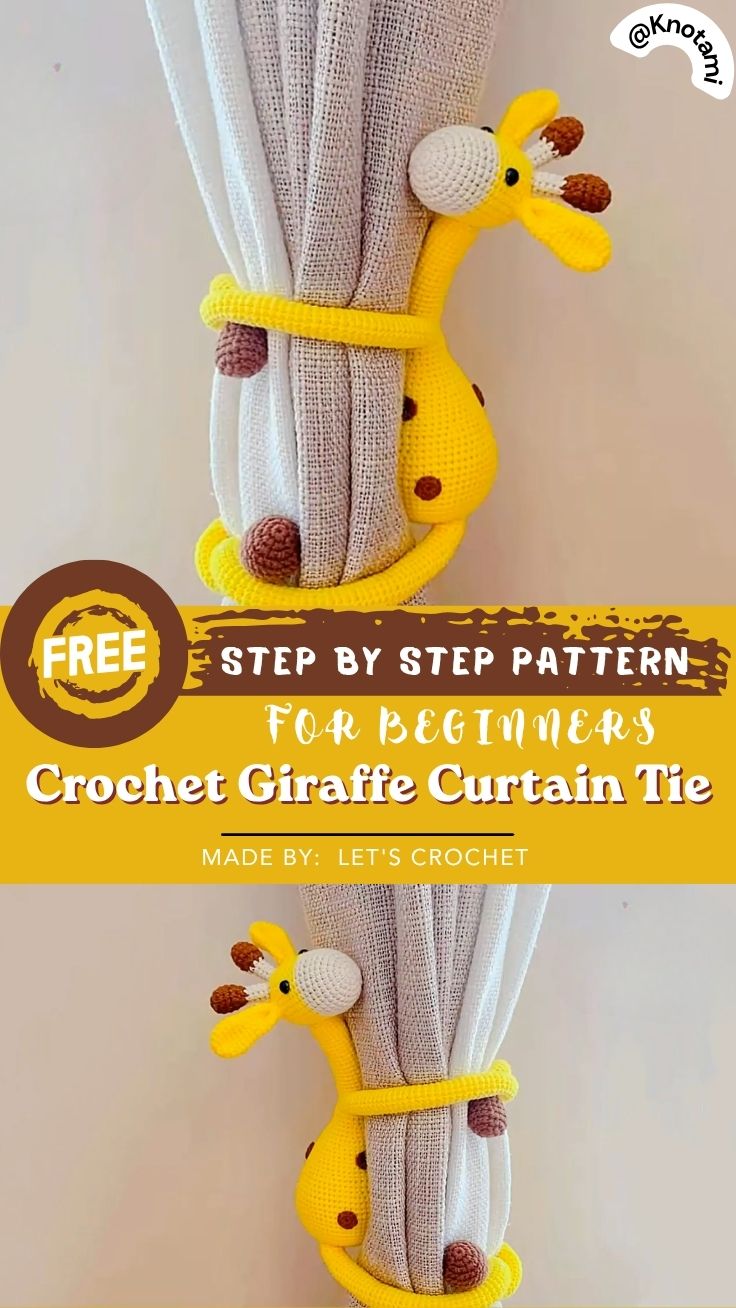
Picture a long-necked giraffe leaning against a sunny window, holding the curtain open. This crochet giraffe curtain tie amigurumi pattern for nursery decor shows you how to make that sweet, spotted decoration.
The long neck is the trickiest part, since it needs to stand tall without flopping or twisting. Along with the steps, you’ll find stuffing tips, stitch checks, and mounting advice to help your giraffe hang neatly.
Safety note: Curtain tiebacks and loops can be a strangulation hazard for young children. Use this giraffe as decoration only, and mount it high, well out of a child’s reach.
Pattern Overview
- Style: A standing giraffe with a long neck, small ossicones (the little horns), ears, and a spotted body, plus a loop that wraps around the curtain.
- Skill level: Confident beginner. You should know the magic ring, single crochet, increases, and decreases.
- Time: About 3 to 4 hours in total, including stuffing, sewing, and a hanging test.
- Size: Depends on your yarn, hook, and neck length. Measure your finished giraffe against your curtain.
Materials
- Yarn: Worsted or aran weight in a main color, a contrast color for the spots and ossicones, and a scrap for the face.
- Crochet hook: One or two sizes smaller than your yarn label suggests. About 3 mm is common with worsted, and the tighter fabric hides the stuffing.
- Stuffing: Polyester fiberfill.
- Tools: Stitch markers, a tapestry needle, scissors, embroidery floss for the face, and strong sewing thread.
- Mounting: A wall hook.
Yarn swaps: Thicker yarn or a larger hook makes a bigger, looser giraffe where the stuffing may show. Finer yarn makes a smaller, denser giraffe with a softer neck. Make a small swatch first.
Abbreviations (US Terms)
- MR – magic ring
- ch – chain
- sc – single crochet
- inc – increase (2 sc in the same stitch)
- dec – invisible decrease
- sl st – slip stitch
- st(s) – stitch(es)
- FO – fasten off
Before You Start
The pieces are worked in a continuous spiral with no joins, so keep a stitch marker in the first stitch of each round. Practice the invisible decrease on a swatch first, since it keeps the head and neck smooth.
Follow the video for the round-by-round stitch counts. The steps below walk you through each part and the checks that keep your giraffe tidy.
How to Crochet the Giraffe Curtain Tie
Step 1: Crochet the Head and Snout
Work the head in the round from a magic ring. Count your stitches before closing, then check the shape before you stuff it. A missed increase shows up as a flat side once the head is filled.
Step 2: Make the Ears and Ossicones
Crochet two ears and two ossicones, stuffing the ossicones lightly. Pin all four pieces to the head and compare them side by side before sewing, so the face looks even.
Step 3: Crochet the Neck and Body
The neck is tall and narrow, so keep your tension even. Stuff the neck first, using small pieces of fiberfill so it stays firm all the way up.
Tip: Before sewing on the head, stand the stuffed neck on a table and press gently on top. If it buckles, add more stuffing while the opening is still easy to reach.
Step 4: Add the Spots
Plan where the spots will go before you stitch anything. See the spot-planning tips below for an easy way to lay them out.
Step 5: Make the Loop
Wrap a piece of scrap yarn around your actual curtain, then measure it. Use that length for the loop so the giraffe holds the curtain without sliding or bunching it.
Step 6: Assemble the Giraffe
- Pin every piece in place before sewing.
- Sew the head to the neck, making sure it’s centered.
- Attach the ears, ossicones, and spots, then embroider the face.
- Sew the loop on securely with strong thread.
- Weave in all the ends firmly, since loose ends are easy to tug.
Video Tutorial
Planning the Spot Placement
- Sketch first: Draw a rough giraffe on paper and mark where each spot should go.
- Test with felt: Cut spot shapes from scrap felt and pin them onto the body to check the layout.
- Mix sizes: A mix of big and small spots looks more natural than rows of identical ones.
- Take a photo: Snap a picture of your final layout so you can repeat it on a second giraffe.
Mounting Your Giraffe
Before you secure anything permanently, hang the giraffe to see whether it sits upright or twists. Measure from the wall hook around the curtain and back to set the final loop length. Mount the hook high, out of a child’s reach, and check the loop and stitching regularly. Heavy or lined curtains may need a thicker loop.
Common Mistakes to Avoid
- A hook that’s too large: It leaves gaps around the neck where stuffing shows.
- Skipping stitch counts: Always count before closing the head.
- Uneven features: Pin the ears and ossicones before sewing.
- A loop that’s too long: The giraffe slides and the curtain bunches.
- Weak thread: Use strong thread to attach the loop.
Troubleshooting
- Floppy or twisting neck: Restuff it more firmly and re-sew the head so it’s centered. If it still bends, shorten the neck slightly.
- Lopsided head: A missed increase or decrease is the usual cause. Recount and redo from the mistake.
- Stuffing shows: Your hook is too large or your tension is too loose. Go down a hook size.
- Loop sags or pulls loose: Rework it with tighter stitches and re-sew it with strong thread.
- Curling ears: Fold them slightly and sew them flat to the head.
Personalization Ideas
- Match the room: Choose body and spot colors that go with the room’s existing tones.
- Mirrored pair: Make two giraffes, one facing each way, for a pair of curtains. Use the same dye lot, hook, and amount of stuffing so they match.
- Safari theme: Pair it with other animal decor for a safari-themed room.
Love giraffes? Try this crochet giraffe amigurumi pattern for a matching plush, or add a crochet bunny box for cute nursery storage.
Washing and Care
Follow your yarn label. Spot clean gently and dry flat. If you’re using light and dark yarns together, test a scrap for color bleeding first.
Frequently Asked Questions
Is the giraffe safe for a baby’s room?
Only as decoration. Curtain tiebacks count as a loop hazard, so mount it high and out of reach, and never give it to a child as a toy.
Can I use any yarn?
Yes, but the size and how much stuffing shows will change. Make a swatch first.
How long should the loop be?
Wrap scrap yarn around your actual curtain, then use that measurement for the loop.
Can I sell finished giraffes?
Label each one as decorative, not a toy, and check the rules for children’s products where you plan to sell.
Final Notes
This crochet giraffe curtain tie brings a playful touch to any window. Build a firm neck, place the features evenly, and mount it safely out of reach, and your spotted friend is ready to hold the curtains open. Happy crocheting!