

Glow up your wardrobe with a Lovely Crochet Skirt. This trendy granny square pattern brings pixel-bright color, comfy stretch, and quick-make magic for everyday slay and vacation sparkle.
Upgrade your wardrobe with the Lovely Crochet Skirt, our trendy Granny Square pattern designed for bold color stories and easy sizing. Additionally, join-as-you-go construction reduces seaming, while beginner-friendly repeats make every square a relaxing win. Choose cotton for breezy summers or acrylic blends for year-round wear; either way, the skirt moves beautifully and holds shape. Furthermore, the pattern scales effortlessly: add panels for more coverage, or shorten for flirty vibes. 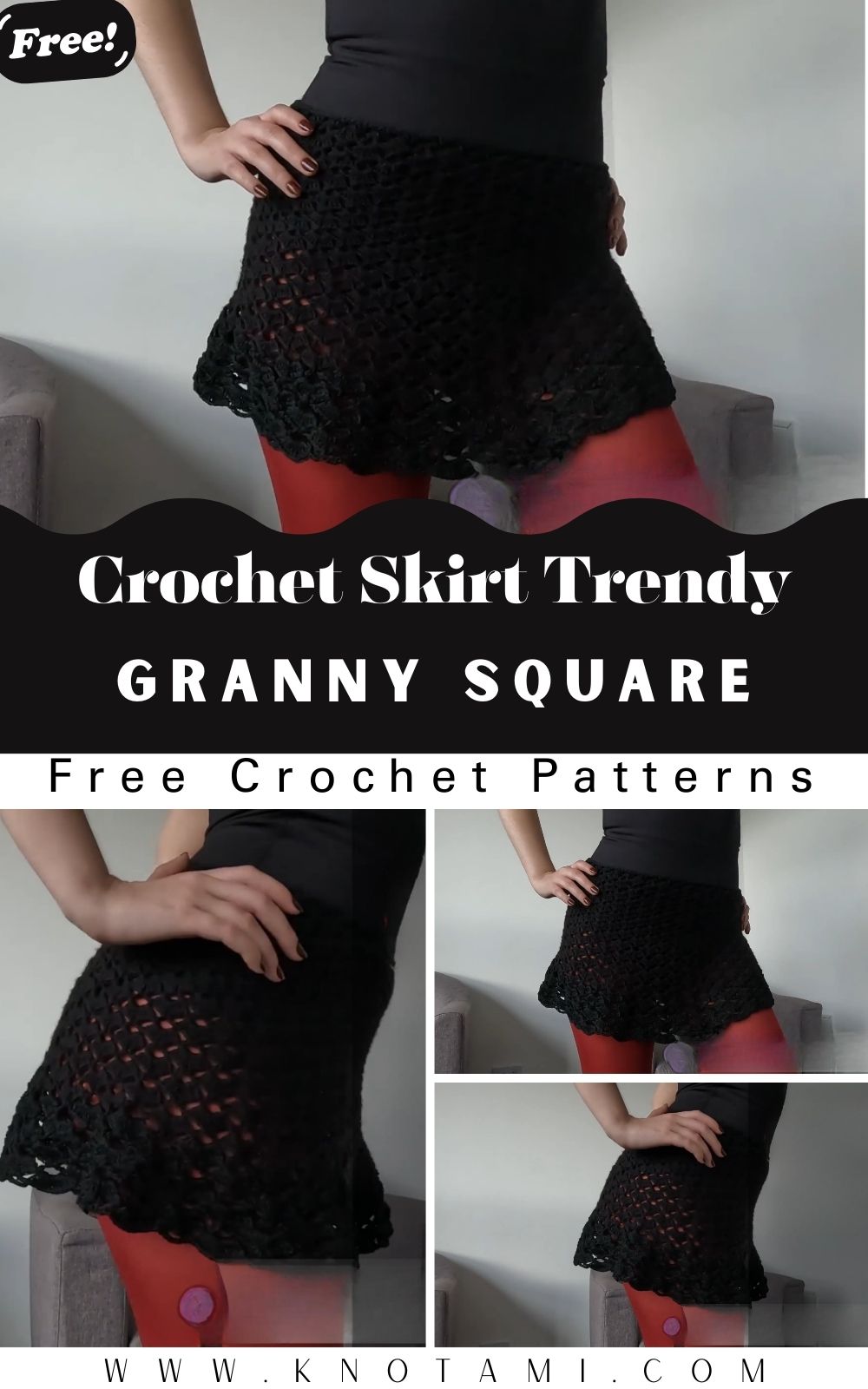
Finally, styling is a breeze. Pair it with a simple tee, a bralette, or a fitted turtleneck to spotlight the graphic geometry.
- Beach cover-up over swimsuits
- Festival dancing and concerts
- Every day casual with sneakers
Graceful, Lovely Crochet Skir,t Trendy Granny Square Pattern
Warm, engaging introduction:
Firstly, welcome to your new favorite wearable crochet project: a graceful, lovely, and truly trendy granny square skirt that twirls beautifully and fits comfortably. Secondly, whether you are a brand-new crocheter or a returning maker, this beginner-friendly guide walks you through every step clearly and gently. Thirdly, because the granny square is timeless and the silhouette is flattering, you will quickly see how fun it is to build a skirt from colorful motifs. Moreover, this pattern is written in easy-to-read language, includes exact measurements, shows you how to size for any body, and gives you confidence from your very first stitch to your final swish. Furthermore, you will find helpful time estimates for each step, thoughtful tips to avoid frustration, and popular variations to personalize your skirt.
Firstly, this is an original, easy-to-follow pattern designed to help you crochet a stylish granny square skirt from scratch without relying on external transcripts. Secondly, because you get detailed measurements and sizing math, you can adapt it confidently to your body and your favorite yarn. Moreover, the steps remain clear, the tone stays supportive, and the results look polished.
Skill Level
Firstly, this pattern is beginner-friendly. Secondly, if you know how to chain, slip stitch, single crochet, double crochet, and join squares, you are ready. Moreover, even if these stitches are new to you, you will find the instructions gentle and achievable.
What You’ll Make
Firstly, you will crochet modular granny squares. Secondly, you will join them to form a skirt panel. Thirdly, you will add a neat waistband with elastic for a comfortable fit. Moreover, you will customize the length and hem style. Finally, you will block the skirt for a smooth, professional finish.
Abbreviations (US Terms)
- ch = chain
- sl st = slip stitch
- sc = single crochet
- dc = double crochet
- sp = space
- ch-sp = chain space
- st(s) = stitch(es)
Materials and Exact Measurements
Firstly, gather everything before you begin, because a prepared workspace keeps your momentum high.
- Yarn: Worsted-weight (Category 4) cotton or cotton-blend for structure and breathability. Moreover, cotton reduces stretching and helps the skirt hold shape.
- Yardage estimates (solid or limited colors):
- XS (24–26 in waist, 34–36 in hip): 600–750 yards
- S (26–28 in waist, 36–38 in hip): 700–850 yards
- M (28–31 in waist, 38–41 in hip): 850–1000 yards
- L (31–34 in waist, 41–44 in hip): 1000–1150 yards
- XL (34–37 in waist, 44–47 in hip): 1150–1300 yards
- 2X (37–41 in waist, 47–51 in hip): 1300–1450 yards
- 3X (41–45 in waist, 51–55 in hip): 1450–1650 yards
- Alternatively, use multiple colors for a patchwork look. Furthermore, allow an extra 10% yardage if you color-block or stripe.
- Yardage estimates (solid or limited colors):
- Hook: 5.0 mm (H-8) for granny squares; 4.5 mm (7) for the waistband ribbing to prevent gaping. Moreover, adjust to meet the square size and gauge.
- Elastic: 1 inch (2.5 cm) wide non-roll elastic, cut to your waist measurement minus 2 inches (5 cm) for gentle negative ease. For example, if your waist is 30 inches (76 cm), cut the elastic to 28 inches (71 cm).
- Tapestry needle: Blunt tip for weaving ends and stitching elastic.
- Stitch markers: At least 8, for marking corners and keeping joins aligned.
- Scissors: Sharp pair for clean cuts.
- Measuring tape: Flexible, garment-style tape for accurate body measurements.
- Blocking supplies: Spray bottle and flat surface, or blocking mats and T-pins.
- Optional lining: Lightweight stretch jersey fabric, 0.75–1.5 yards (0.7–1.4 m), depending on size and length. Moreover, you may use an existing slip if you prefer not to sew.
Gauge and Square Size
Firstly, the granny square gauge matters because it determines how many squares you need. Secondly, make one test square in your chosen yarn and hook.
- Test Square: Classic 4-round granny square should measure approximately 4.75 inches (12 cm) square after light blocking.
- If your square is smaller, switch to a larger hook; if it is larger, switch to a smaller hook.
- Alternatively, you may keep your hook and change the number of squares to match measurements.
Sizing and Fit Planning
Firstly, take these body measurements while standing naturally, because posture affects fit.
- Waist: Narrowest point, usually above the navel.
- High Hip: Around the top of the hip bones.
- Full Hip: Widest point around your bottom/hips.
- Desired Length: Measure from your natural waist to where you want the hem to fall.
- Ease Choices: The waistband uses elastic for comfort, while the skirt body should match or slightly exceed your full hip for movement.
Moreover, the skirt’s width around the hips equals the number of squares across multiplied by each square’s width. Consequently, you choose how many squares you need around and how many rows of squares you need vertically.
Example square size and counts:
- If your square is 4.75 in wide, then:
- Around the body:
- 36 in hip ≈ 36 / 4.75 ≈ 7.6 squares → round up to 8 squares
- 40 in hip ≈ 8–9 squares
- 44 in hip ≈ 9–10 squares
- 48 in hip ≈ 10–11 squares
- 52 in hip ≈ 11 squares
- Vertical rows for length:
- Mini: 2 rows of squares (≈ 9.5 in before waistband and hem)
- Midi: 3 rows of squares (≈ 14.25 in before hem)
- Maxi: 4 rows of squares (≈ 19 in before hem)
Additionally, you will add a waistband (≈ 1 in) and an optional hem/ruffle (≈ 1–3 in), so plan accordingly. Furthermore, for curvier hips, add one extra column of squares or add a flare panel along the side seams.
- Around the body:
Color Planning
Firstly, choose your palette before you start. Secondly, decide whether you want:
- Monochrome squares with contrasting joins
- Random scrap-friendly patchwork
- Repeating gradients for an ombré effect
Moreover, lay squares out on a table as you progress so your design stays cohesive.
Step-by-Step Instructions with Time Estimates
Step 1: Measure, Plan, and Sketch (Estimated time: 10–15 minutes)
Firstly, measure your waist, high hip, full hip, and desired length. Secondly, note the size of your gauge square. Thirdly, compute the number of squares: squares-around = full-hip ÷ square-width, then round up. Moreover, compute rows-down = desired length ÷ square-height, then round to the nearest whole number. Additionally, sketch a quick grid representing squares, rows, and color placement. Consequently, you start with a clear plan and fewer fit surprises.
Step 2: Make a Gauge Square and Adjust (Estimated time: 20–30 minutes)
Firstly, crochet one 4-round granny square using the instructions in Step 3. Secondly, block it lightly with steam or a gentle mist to get the true size. Thirdly, measure all sides; if it is not close to 4.75 inches (12 cm), adjust the hook size and remake. Moreover, remember that cotton blooms slightly after blocking, so measure after it dries. Consequently, your final skirt will fit as planned.
Step 3: Crochet the Classic Granny Square (4 Rounds) (Estimated time: 15–25 minutes per square)
Firstly, use your 5.0 mm hook and chosen yarn. Secondly, work in US terms.
- Round 1: Ch 4, sl st to first ch to form a ring. Ch 3 (counts as first dc), 2 dc in ring, ch 2, (3 dc, ch 2) three more times in ring, sl st to top of initial ch-3 to join. (You now have 4 groups of 3 dc with 4 corner ch-2 spaces.)
- Round 2: Sl st into next 2 dc and into corner ch-2 sp to position. Ch 3, 2 dc in same corner, ch 2, 3 dc in same corner. In the next corner sp: (3 dc, ch 2, 3 dc). Repeat for the remaining corners. Sl st to top of initial ch-3.
- Round 3: Sl st to corner sp. In each corner sp: (3 dc, ch 2, 3 dc). In each side space between corner clusters: 3 dc. Sl st to join.
- Round 4: Repeat Round 3 logic: In each corner sp: (3 dc, ch 2, 3 dc). In each side space: 3 dc. Sl st to join.
Fasten off. Weave ends lightly or leave long tails for sewing. Moreover, place the square flat and admire your work. Consequently, you have your building block.
Step 4: Make All Your Squares (Estimated time: varies by size)
Firstly, calculate your total square count: squares-around × rows-down. Secondly, add 2 extra squares as backups or pockets. Thirdly, use the per-square time from Step 3 to estimate your total time.
- Example time guide:
- Mini (2 rows × 8–11 squares around): 16–22 squares total → about 4–9 hours
- Midi (3 rows × 8–11 squares around): 24–33 squares total → about 6–14 hours
- Maxi (4 rows × 8–11 squares around): 32–44 squares total → about 8–18 hours
Moreover, work in batches by color for efficiency. Furthermore, set completed squares aside in neat stacks by row to simplify joining later.
Step 5: Block Your Squares (Estimated active time: 30–60 minutes; drying time: 2–12 hours)
Firstly, mist squares with water or use gentle steam. Secondly, pin to size (e.g., 4.75 in) on blocking mats. Thirdly, allow them to dry fully so they set to consistent dimensions. Moreover, this step makes joining cleaner and produces a smooth, graceful drape. Consequently, your finished skirt looks boutique-level polished.
Step 6: Join Squares into a Flat Panel (Estimated time: 45–90 minutes)
Firstly, arrange the squares according to your layout. Secondly, choose a joining method:
- Whipstitch Join: Place squares right sides together, whipstitch through back loops only with a tapestry needle for an almost invisible seam.
- Single Crochet Join: Place squares wrong sides together and sc through both loops along edges for a slight ridge as a design feature.
- Join-As-You-Go: On the final round of each square, slip stitch to the neighboring square’s ch-sp and between cluster spaces to connect live.
Thirdly, join squares into rows first, then join rows together to form one big rectangular panel. Moreover, place markers at row ends to keep edges even. Consequently, the panel will wrap around your body and seam neatly in the back.
Step 7: Seam the Back (Estimated time: 15–25 minutes)
Firstly, fold the panel with right sides together, aligning squares carefully. Secondly, seam the vertical edges using the same method as your joins. Thirdly, check that corners match and that there is no twist. Moreover, this creates a continuous tube. Consequently, the skirt now takes shape.
Step 8: Add the Waistband Foundation (Estimated time: 20–30 minutes)
Firstly, switch to the 4.5 mm hook to keep the waist snug. Secondly, with the top edge of the skirt facing up, join yarn to any seam or corner. Thirdly, work one round of sc evenly around the entire top edge, placing 1 sc in each dc and 1 sc in each ch-sp for a flat edge. Moreover, place a stitch marker in the first sc to mark the round start. Consequently, you now have a stable base for the waistband.
Step 9: Build the Waistband Casing (Estimated time: 20–30 minutes)
Firstly, continue with sc rounds for 5–7 rounds to reach a height slightly wider than your elastic (about 1.25 inches / 3.2 cm). Secondly, keep tension even so the waistband does not flare. Thirdly, finish with a final round of sc. Moreover, leave a 2-inch (5 cm) opening unsewn at the back seam to insert elastic later. Consequently, you have a professional-looking casing.
Alternative waistband (rib-look, still a casing):
Firstly, after the foundation round, switch to hdc in the back loop only (hdc-BLO) for 4–6 rounds. Secondly, this creates gentle ribbing that hugs nicely. Moreover, sew a 2-inch opening to insert the elastic. Consequently, you get texture plus function.
Step 10: Insert and Secure the Elastic (Estimated time: 10–15 minutes)
Firstly, cut the elastic to the waist minus 2 inches (5 cm). Secondly, attach a safety pin to one end and thread it through the casing, ensuring the elastic stays flat. Thirdly, overlap ends by 1 inch (2.5 cm) and zigzag-sew or whipstitch securely. Moreover, the distribution is even around the waistband. Consequently, close the casing opening with a few neat sc or a discreet whipstitch.
Step 11: Add a Graceful Hem (Choose one) (Estimated time: 30–60 minutes)
Firstly, decide how much flair you prefer. Secondly, choose one of these hem finishes:
- Simple Clean Edge:
- Round 1: With a 5.0 mm hook, join yarn to any hem edge and sc around evenly.
- Round 2: Work dc around evenly. Fasten off and weave ends.
- Moreover, this version keeps the focus on the squares. Consequently, it suits minis and pencil silhouettes.
- Ruffled Hem:
- Round 1: Join yarn and sc around evenly.
- Round 2: Work 2 dc in each stitch around to double the stitch count.
- Round 3 (optional): Work (2 dc in next st, 1 dc in next st) around for extra flare.
- Moreover, block lightly so ruffles relax beautifully. Consequently, you get a romantic, swishy finish.
- Shell Edge:
- Round 1: Join yarn and sc around.
- Round 2: Work (sk 1, 5 dc in next st, sk 1, sc in next st) repeat around.
- Moreover, shells add vintage charm. Consequently, your hem looks delightfully delicate.
Step 12: Weave Ends and Final Block (Estimated active time: 20–30 minutes; drying time: 2–12 hours)
Firstly, weave all yarn tails on the wrong side with a tapestry needle. Secondly, lay the skirt flat, shape the hem, and gently steam or mist to smooth the joins. Thirdly, allow to dry completely so the fabric sets. Moreover, this final block relaxes stitches and aligns motifs. Consequently, your skirt drapes gracefully and fits comfortably.
Optional Step 13: Add a Lining (Estimated time: 15–45 minutes)
Firstly, if you prefer more coverage, cut a piece of lightweight stretch jersey to match the skirt’s width and desired length minus 1 inch. Secondly, sew the short sides together to form a tube and hem the bottom. Thirdly, hand-stitch or lightly tack the lining to the inside of the waistband seam only. Moreover, a stretch lining preserves movement. Consequently, the lining remains invisible and comfortable.
Basic Tips for Success
Firstly, keep your tension consistent by taking short breaks every 2–3 squares. Secondly, use stitch markers in corner ch-2 spaces to maintain perfect squares. Thirdly, weave square tails as you go if you want faster finishing. Moreover, plan color placement ahead of time to avoid last-minute clashes. Furthermore, prewash colorful yarns or steam-block separately to check colorfastness. Additionally, measure the panel against your body before sewing to catch fit issues early. Finally, choose cotton or cotton-blend yarn to minimize sagging and maximize crisp stitch definition.
Common Mistakes and How to Fix Them
Firstly, wavy squares usually mean too many stitches in side spaces or loose tension; therefore, recount clusters and moderate your grip. Secondly, tight, cupping squares indicate too few stitches or a hook that is too small; consequently, go up a hook size and steam lightly. Thirdly, misaligned joins happen when corners are off by one stitch; therefore, clip corners together with markers before you seam.
Variations to Personalize Your Skirt
Firstly, change the motif:
- Sunburst granny squares for extra texture
- Daisy-centered grannies for a floral focus
- Solid granny squares (no ch spaces) for a denser fabric
Secondly, change the silhouette: - Two rows of squares for a mini
- Three rows for a midi
- Four rows plus a ruffle for a dreamy maxi
Thirdly, change the waistband: - Replace elastic with a drawstring: crochet a 60–80 inch chain cord and weave through eyelets made by ch-1 spaces in a waistband round
- Add 1–2 short rows of sc at the back for a subtle high-low fit
Moreover, change the yarn: - Bamboo-cotton for drape and summer softness
- Wool blend for cooler months and cozy structure
- Sparkle thread is carried along only in the final round for a festive edge
Furthermore, change the color story: - Neutrals with a bold hem accent for a modern look
- Full rainbow for a festival-ready vibe
- Two-color checkerboard for strong graphic impact
Additionally, add features: - Hidden pocket: make an extra square, seam on the inside of the panel at hip height, and leave the top edge open
- Side slit: stop seaming 5–7 inches above the hem on one side for a breezy walk
Finally, change the edge: - Picot trim (sc, ch 3, sl st in same st) around the hem for a dainty finish
Estimated Total Making Time
Firstly, your total time depends on the size and length. Secondly, minis tend to take 6–12 hours, midis 10–20 hours, and maxis 14–26 hours. Moreover, batching squares and weaving ends as you go can shave hours off the finishing. Consequently, setting a daily rhythm (for example, 3–5 squares per evening) makes the process relaxing and sustainable.
Care and Wear
Firstly, hand-wash or machine-wash on gentle in cool water, according to your yarn label. Secondly, lay flat to dry to prevent stretching. Thirdly, store folded, not hung. Moreover, refresh the shape with a light steam once in a while. Consequently, your skirt remains graceful, lovely, and ready for every outing.
Troubleshooting Fit
Firstly, if the skirt feels snug at the hips, add a narrow godet: pick up stitches along one side seam and work a triangle insert (increase 2–4 sts per row) for 4–6 inches. Secondly, if the waist rides up, lengthen the waistband by one additional sc round, or reduce the elastic overlap by 0.5 inch. Thirdly, if the hem flips outward, switch the last round to sc-BLO and steam to relax. Moreover, if the skirt creeps when you walk, add a light stretch lining. Consequently, these small tweaks solve most fit concerns quickly.
Eco and Budget Tips
Firstly, use stash yarn and plan a controlled palette for a cohesive patchwork. Secondly, join with the darkest color for tidy seams that disappear. Thirdly, block with a fine mist rather than heavy steam if you are unsure about the fiber content. Moreover, make a matching headband or scrunchie with leftovers. Consequently, you reduce waste and create a coordinated outfit.
Quick Reference: Classic Granny Square (US Terms)
Firstly, for easy scanning, here is a concise version:
- Rnd 1: Ch 4, sl st to form ring. Ch 3, 2 dc in ring, ch 2, (3 dc, ch 2) × 3, sl st to join.
- Rnd 2: In each corner sp: (3 dc, ch 2, 3 dc). Sl st to join.
- Rnd 3: In each corner sp: (3 dc, ch 2, 3 dc); in each side sp: 3 dc. Sl st to join.
- Rnd 4: Repeat Round 3. Fasten off.
Moreover, block to 4.75 in (12 cm). Consequently, maintain consistent tension for perfect uniformity.
Why This Skirt Is So Beginner-Friendly
Firstly, modular construction lets you work in small, satisfying pieces. Secondly, joining squares is repetitive and meditative, which builds confidence. Thirdly, a simple waistband with elastic removes the stress of complicated shaping. Moreover, the hem options let you decide your level of flourish. Consequently, the skirt stays stylish yet achievable.
Summary to help others discover this pattern
Firstly, if you searched for “Graceful Lovely Crochet Skirt Trendy Granny Square Pattern,” you are in the right place. Secondly, this beginner-friendly, step-by-step tutorial includes exact measurements, a comprehensive material list, clear granny square instructions, and multiple finishing options. Moreover, it is perfect for makers who want an easy, breathable, cotton-based skirt with a flattering fit.
Final Encouragement
Firstly, take a breath and enjoy the rhythm of the stitches. Secondly, celebrate each completed square as a tiny victory. Thirdly, embrace color, play with layouts, and trust the process. Moreover, remember that handmade garments are meant to be tried on, tweaked, and treasured. Consequently, your graceful, lovely, trendy granny square skirt will feel uniquely yours, look beautifully crafted, and swirl with every step. Finally, when you finish, share your creation with your community, because your success inspires the next maker to pick up a hook and begin.